
Faith, Biblical Leadership, Christian Living
Why Character Matters More Than Charisma in Biblical Leadership
On an ordinary day, when routines feel familiar and the week is still taking shape, Scripture quietly reminds us that what truly sustains God’s work is not personality, but character shaped by Christ.
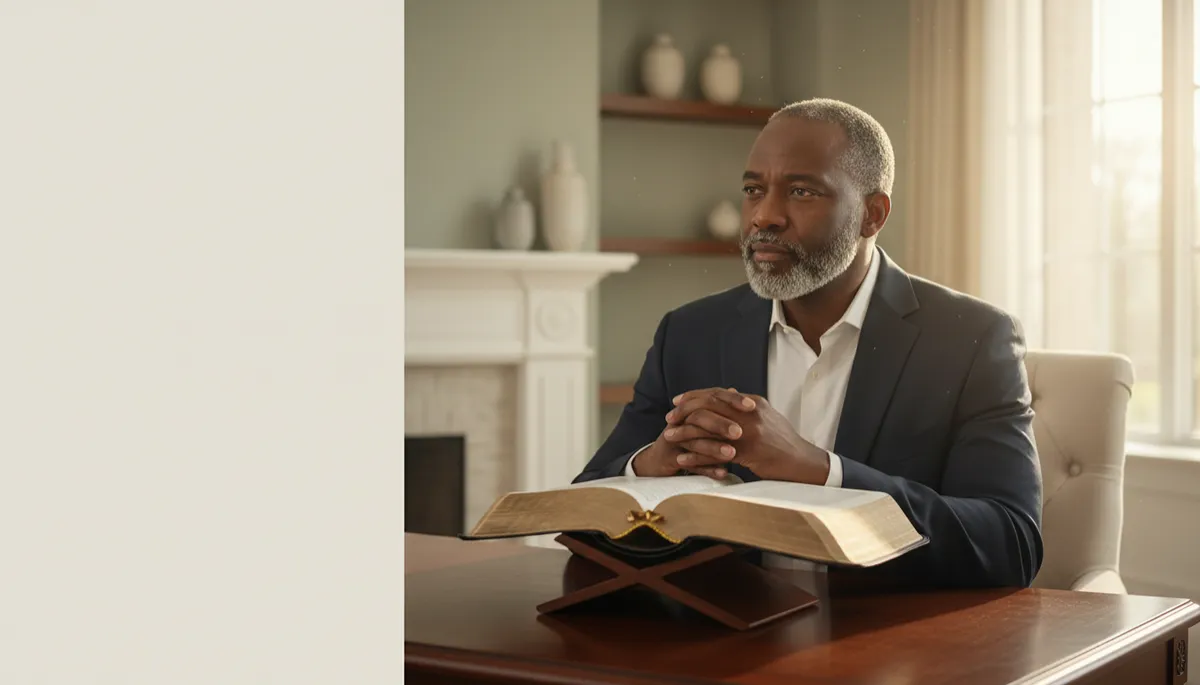
Titus 1:7–9: God’s Standard for Spiritual Leadership
Paul’s words to Titus give a clear picture of what biblical leadership looks like beneath the surface. In Titus 1:7–9, he writes that an overseer must be “above reproach, as God’s steward; not self-willed, not quick-tempered, not addicted to wine, not pugnacious, not fond of sordid gain, but hospitable, loving what is good, sensible, just, devout, self-controlled, holding fast the faithful word which is in accordance with the teaching.”
This passage shifts our focus from how a leader appears to who a leader is. It is not the stage presence or the magnetism of a personality that God highlights, but a life anchored in Christlike character and sound doctrine.
Character Over Charisma: What God Values Most
We live in a culture that prizes charisma. A gifted communicator, a captivating storyteller, or a talented musician can quickly gather a crowd. Yet Scripture consistently teaches that external talent is never a substitute for internal holiness. Charisma may fill a room, but only character can build a godly house that stands over time.
The devotion of Titus 1:7–9 reminds us that true spiritual leadership is measured not by applause, but by alignment with God’s heart. A leader may be impressive on a platform, but if their private life contradicts the teachings of Christ, the foundation is fragile. God is far more concerned with what cannot be seen from the back row of a sanctuary: motives, integrity, and obedience when no one is watching.
Marks of True Spiritual Leadership: Self-Control, Discipline, Hospitality, Doctrine
Paul highlights several qualities that distinguish godly leaders. These are not optional extras; they are essential marks of a life surrendered to Christ and shaped by His Spirit.
Self-control: A leader who is not ruled by impulse, anger, or desire, but by the Spirit of God. Self-control protects both the leader and those they influence.
Discipline: A steady, ordered life that chooses obedience when it is difficult, shows up when it is inconvenient, and pursues holiness in the hidden places of the heart.
Hospitality: Opening one’s home and heart, making space for people, especially the overlooked. True leaders do not only speak from a distance; they share life up close.
Soundness of doctrine: “Holding fast the faithful word” means clinging to Scripture, teaching what is true, and refusing to bend God’s Word to fit cultural trends or personal preference.
Quiet, consistent character in everyday spaces often shapes lives more than any stage.
Talent Draws a Crowd; Character Sustains a Godly House
It is possible to build something impressive on the outside—large gatherings, strong branding, powerful moments—while neglecting the inner life. But when storms come, only what is built on obedience to Jesus remains. External talent can draw a crowd; only internal character can sustain a godly house.
This is true not only for pastors and elders, but for any Christian who influences others: parents, mentors, ministry volunteers, and friends. God is calling us to be people whose lives quietly testify to His grace long after the spotlight has moved on.
Testing the Voices We Follow: Scripture Over Feelings
In a digital age, many of our “leaders” are people we have never met: preachers, influencers, authors, and musicians whose content fills our feeds. Their charisma can stir our emotions, but emotion alone is not a safe guide. We are called to evaluate every voice against Scripture, not our feelings.
A message may sound inspiring, compassionate, or bold, yet still drift from the “faithful word” of Titus 1:9. The question is not, “Does this make me feel good?” but, “Does this align with God’s Word?” Feelings fluctuate; Scripture stands. When we let the Bible, not our mood, be the measure, we guard our hearts and honor Christ.
📌 Key Takeaway: Don’t be swept away by charisma. Let Scripture, not emotions, determine who you trust and what you receive.
An Action Step: Reflect on the Voices You Consume
As you move through this day, take a few quiet minutes with Titus 1:7–9 open in front of you. Then ask:
Whose voices am I regularly listening to—online, in podcasts, books, music, and sermons?
Do their lives and messages reflect self-control, discipline, hospitality, and sound doctrine?
Am I more drawn to their charisma, or to their Christlike character and faithfulness to God’s Word?
Consider choosing one voice to step back from this week if it does not clearly align with Scripture, and intentionally lean into a resource or relationship that helps you grow in Christlike character instead. In doing so, you are not only guarding your own heart—you are also learning to value what God values in every leader you follow: a life shaped by truth, marked by love, and sustained by quiet, steady obedience.